
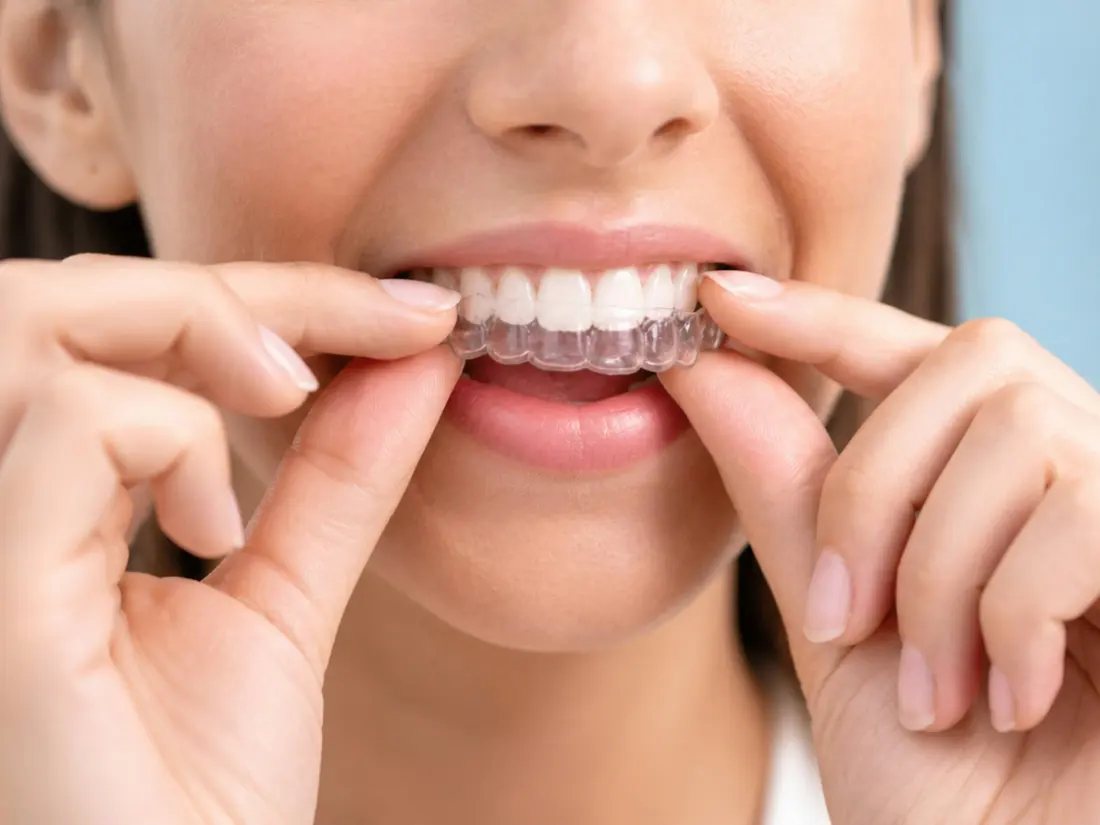
The short answer
Invisalign is a clear aligner system that straightens teeth with a series of custom, removable plastic trays, each worn for about one to two weeks. At Gentle Care Dentistry & Implants in Sierra Vista, AZ, Dr. Kent Hales uses digital impressions to plan treatment and sees you for periodic check-ins. Aligners are worn about 20 to 22 hours a day and removed to eat and brush.
How Invisalign works
Instead of brackets and wires, Invisalign uses a sequence of clear plastic aligners made from a digital model of your teeth. Each set is shaped slightly differently from the last. Wearing them applies gentle, steady pressure that moves teeth a small distance at a time. You switch to the next set on a schedule, and over the course of treatment the small movements add up to a straighter smile.
What it can fix
Clear aligners are well suited to many of the most common reasons adults want orthodontic treatment:
- Crowded or overlapping teeth
- Gaps between teeth
- Teeth that have shifted after braces years ago
- Some overbite, underbite and crossbite problems
Straighter teeth are not only a cosmetic change. Teeth that overlap are harder to clean, which raises the risk of cavities and gum disease, and a bite that does not meet evenly can wear teeth down.
Some complex bite problems are better treated by an orthodontist with traditional braces. If that is the case for you, Dr. Hales will tell you and point you in the right direction.
What wearing aligners is really like
The aligners need to be in your mouth most of the day, roughly 20 to 22 hours. In practice that means you take them out to eat, drink anything other than plain water, and brush, then put them straight back in. People who succeed with Invisalign build that routine quickly. People who leave them in a case for hours at a time get slower, less predictable results.
You may notice a slight change in your speech for the first day or two with each new set, and a feeling of pressure when you switch. Both pass.
Combining Invisalign with other treatment
Straightening teeth first can make other cosmetic work simpler and more conservative. For example, moving a crowded tooth into line can mean it needs a thin veneer, or nothing at all, instead of being heavily reshaped. If you are thinking about veneers or whitening, ask about the order of treatment at your consultation.
Cost and payment
The cost of Invisalign depends on the length and complexity of treatment. Some dental insurance plans include an orthodontic benefit that can apply, and the team will check yours. CareCredit and Cherry offer monthly payment options. Call (520) 458-9460 to schedule a smile consultation.